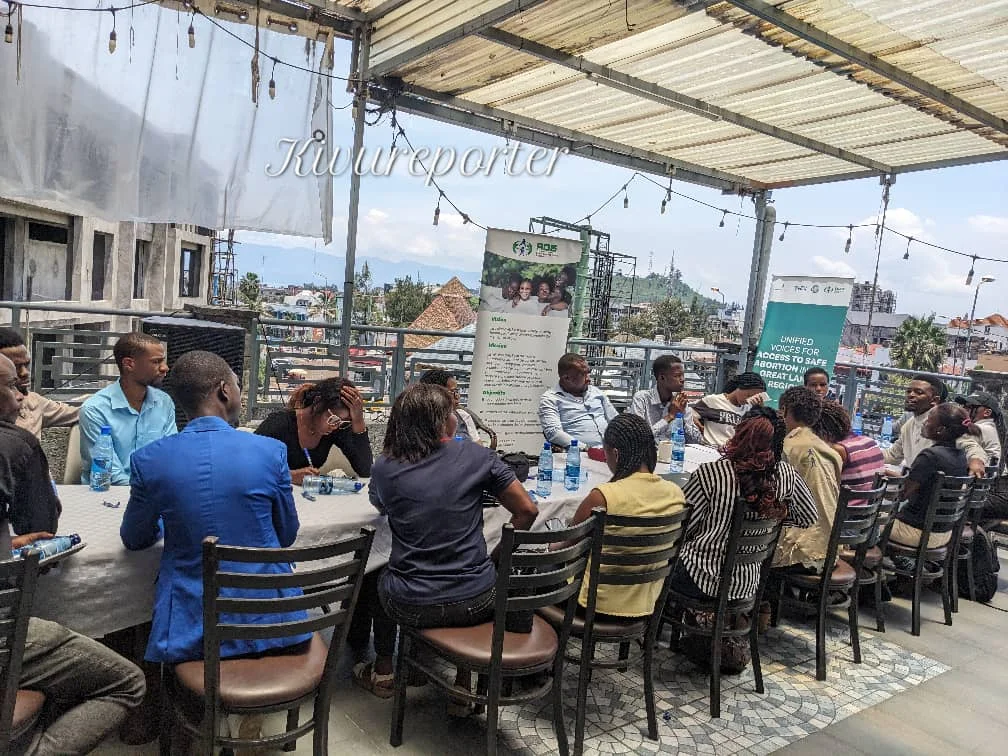
Reunited on Friday, April 3, 2026 in Goma, in the North-Kivu province, journalists, bloggers and digital content creators exchanged with the organization Action for Solidarity Rights (ADS) around the challenges related to sexual and reproductive health communication.
Organized in a context where several themes related to reproductive health remain taboo within the community, this meeting brought together more than twenty media actors. The objective was to stimulate in-depth reflection on the role of journalists in awareness-raising, as well as on the obstacles that hinder the effective dissemination of these messages.
A key role for the media in a sensitive context According to Jamimah Kamala, program officer at ADS, journalists occupy a strategic position in transmitting information to the population.
“Journalists stand between messages and the community. They are an important target for popularizing information on sexual and reproductive health. This meeting also made it possible to discuss the challenges they face in the exercise of their profession,” she explained.
The discussions also focused on perspectives for improving media coverage of these issues, particularly in an environment where topics such as contraceptive methods or safe abortion remain largely stigmatized.
Multiple challenges in Goma In Goma, several media initiatives already exist to promote rights related to sexual and reproductive health. However, their impact remains limited due to sociocultural and religious resistance.
Participants identified several major challenges: Negative perception of the community; lack of media funding; influence of certain partners opposed to these themes. Personal and professional constraints of journalists Some journalists also mentioned significant social pressures. “We are sometimes perceived as promoters of abortion or influenced by foreign interests.
The main challenge remains the community’s perception of these issues,” testified Patient Rwamigabo and Sonia, respectively content creator and journalists. Another obstacle noted is the misunderstanding of the concept of reproductive health, often reduced to the sole question of abortion, when it encompasses several dimensions.
Still limited understanding of reproductive health The speakers emphasized the need to broaden the understanding of sexual and reproductive health within the population. As ADS recalls, this field includes in particular: Women’s rights; Sexual and gender-based violence; Menstrual hygiene; Access to family planning services.
These elements are notably recognized in the Maputo Protocol, which governs reproductive health rights in Africa. Solutions to improve communication Faced with these challenges, several recommendations were formulated by the participants. Among the main avenues proposed, it should be noted the need to: diversify content formats; Use multiple distribution channels (radio, television, digital platforms); Strengthen mass awareness, particularly in rural areas and encourage journalist engagement on these issues Participants also emphasized the social responsibility of the media in disseminating reliable and accessible information.
Towards a collective dynamic of the media Through this initiative, ADS intends to strengthen collaboration with media actors in order to develop communication strategies adapted to local realities. The meeting concluded with the establishment of a network of journalists committed to issues of sexual and reproductive health rights, an initiative recommended and welcomed by the participants. “Without forgetting that we talked about creating content on these issues, it is for the community that we do it.
So that through radio and television and other means of communication, the community can have access to information.”, concluded Jemimah Kamala, program officer at ADS. Copyright: https://kivureporter.net/